
Reviewed · WELWITSCHIA & MOON LANDSCAPE DRIVES
Swakopmund: Moon Valley and Namib Desert Welwitschia Tour
This experience is interesting because it mixes ancient Moon Valley canyons with the Namib Desert’s most famous botanical oddball, Welwitschia mirabilis. I especially like the way the guide turns dry-looking ground into a story about survival, and I like that you get both big views and close-up plant education. One consideration: wildlife sightings are not guaranteed, and the terrain is uneven, even if the walking is minimal.
You also get a tight schedule that works well from Swakopmund, plus a small-group feel, limited to 2 participants. You’ll likely have an easier time keeping up, asking questions in English, and actually hearing the explanations instead of shouting over a crowd. If you’re expecting a long hike or guaranteed animals, plan to adjust your mindset.
Key highlights worth your attention
- Moon Valley geology: ancient badlands that help you picture the Namib over millions of years
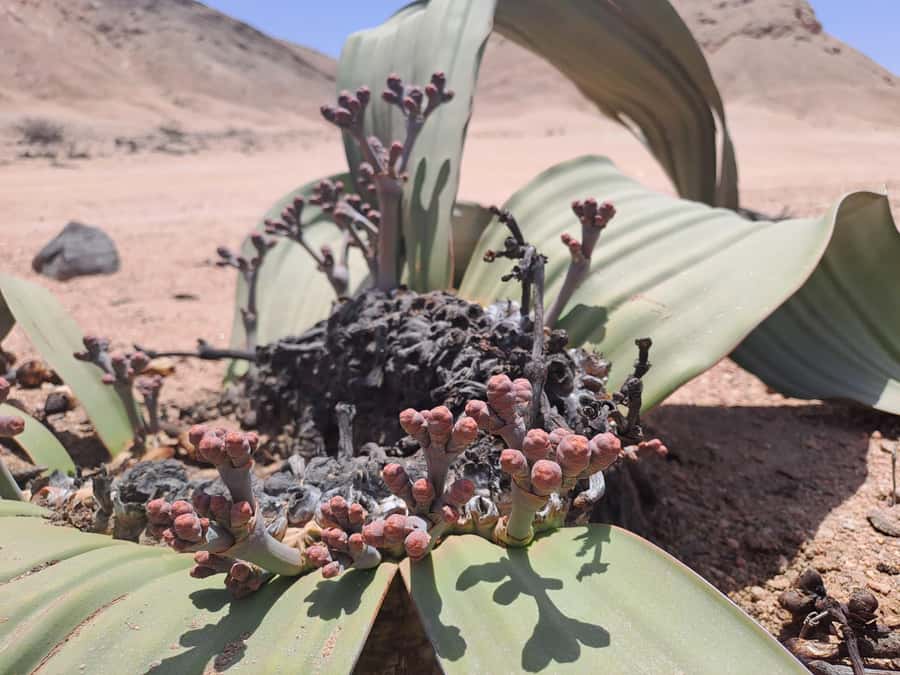
- Welwitschia mirabilis secrets: a plant guide uses to explain desert adaptation in plain terms
- Desert flora uses: medicinal and nutritional roles, explained as part of Indigenous knowledge
- Wildlife spotting chances: springbok, ostrich, chameleons, and more you might see in their habitat
- Photo stops plus a secret stop: viewpoints built into the flow, not just a drive-by
- Small group up to 2: more conversation with your guide, less time stuck behind other people
Moon Valley in the Namib Desert: where time feels visible
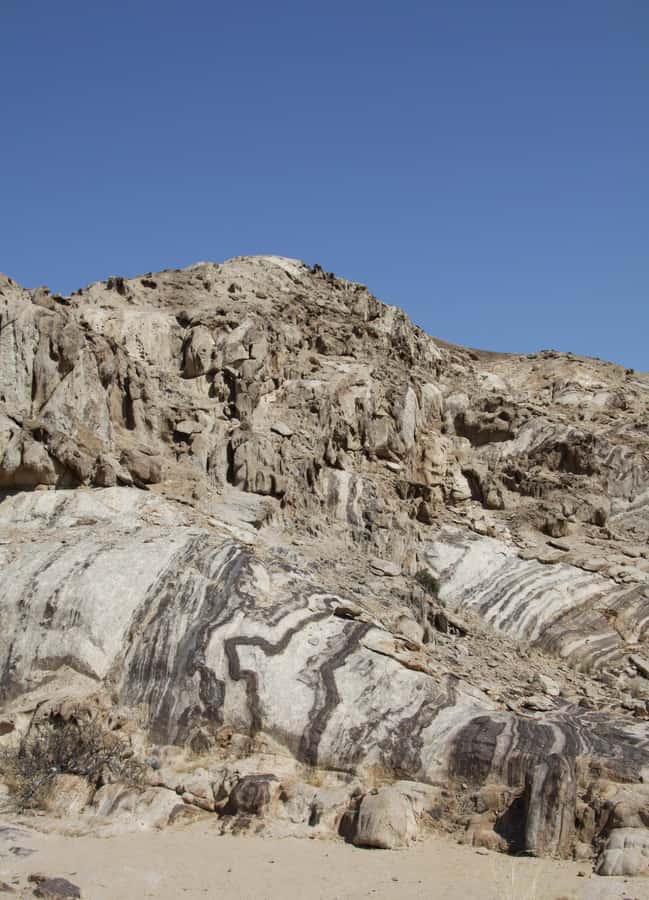
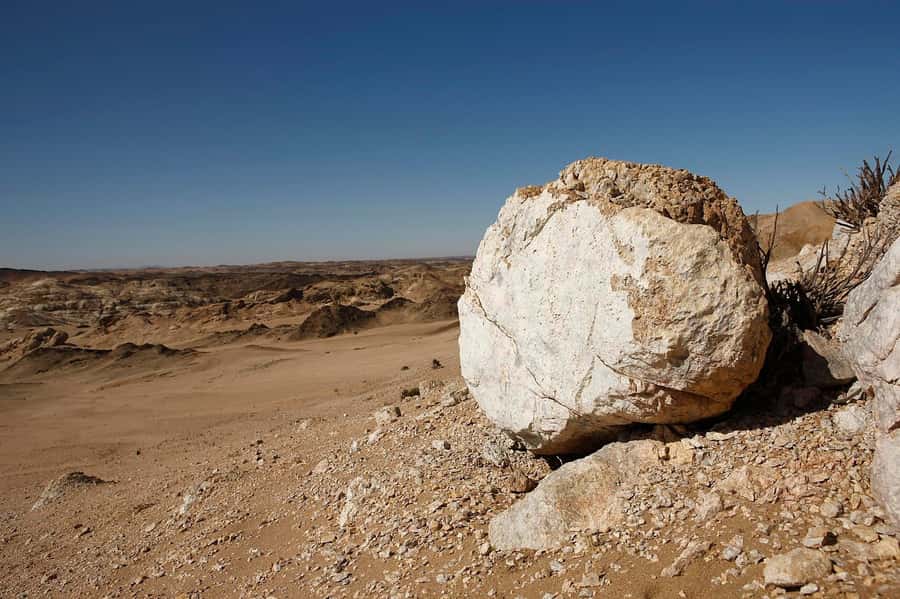
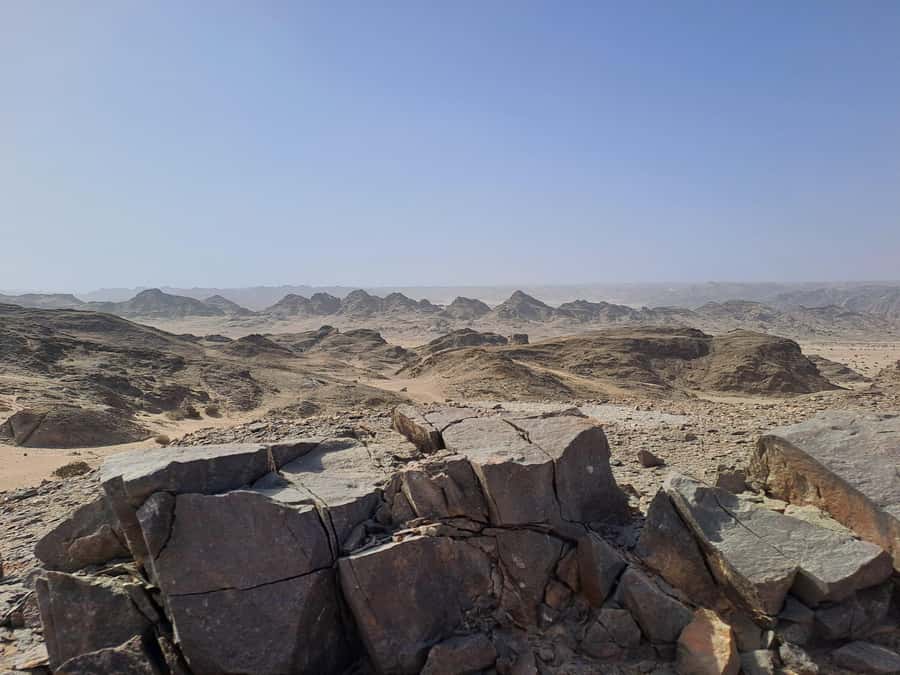
Moon Valley is the kind of place where your brain keeps reaching for a scale it can trust. The canyons and badlands look sculpted and dramatic, and the tour framing helps you understand they formed long ago, over the span of millions of years. Instead of treating it like a postcard stop, the guide connects the shapes in front of you to why this is such a famous Namib site.
What I like in particular is the focus on observation. You’ll spend time looking at rock formations and how the desert surface changes from spot to spot. That matters because the whole area teaches you a basic Namib lesson, harsh conditions shape everything, including what grows and what survives.
You also get a built-in photo viewpoint stop during the guided portion. It’s the moment to step back, compose shots, and soak in the scale before the tour shifts back to details like plants and smaller wildlife cues. If you’re the type who likes to photograph, this pacing prevents you from getting stuck chasing pictures while your guide is talking.
More of the Namib:
- NAMIB DESERT TOURS, Full-Day and Half-Day Tours from Swakopmund, Namibia
★ 5.0 · 11 reviews - Full-Day Tour in Namib Desert from Swakopmund, Namibia
★ 5.0 · 3 reviews - Namib Desert Landscape Tour
★ 5.0 · 20 reviews
Welwitschia mirabilis: the plant that makes the Namib Desert feel strange in a good way
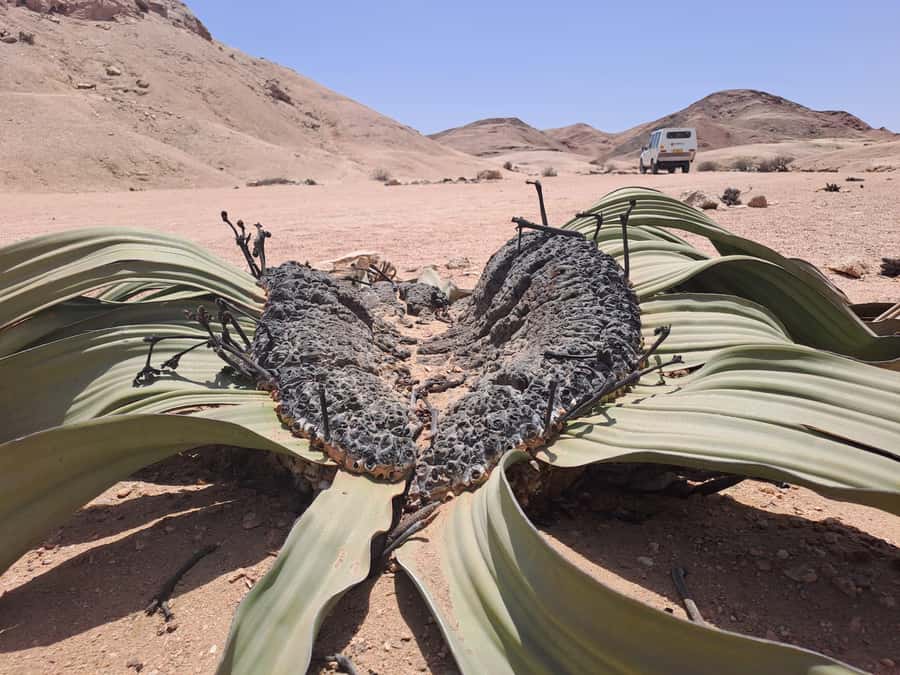
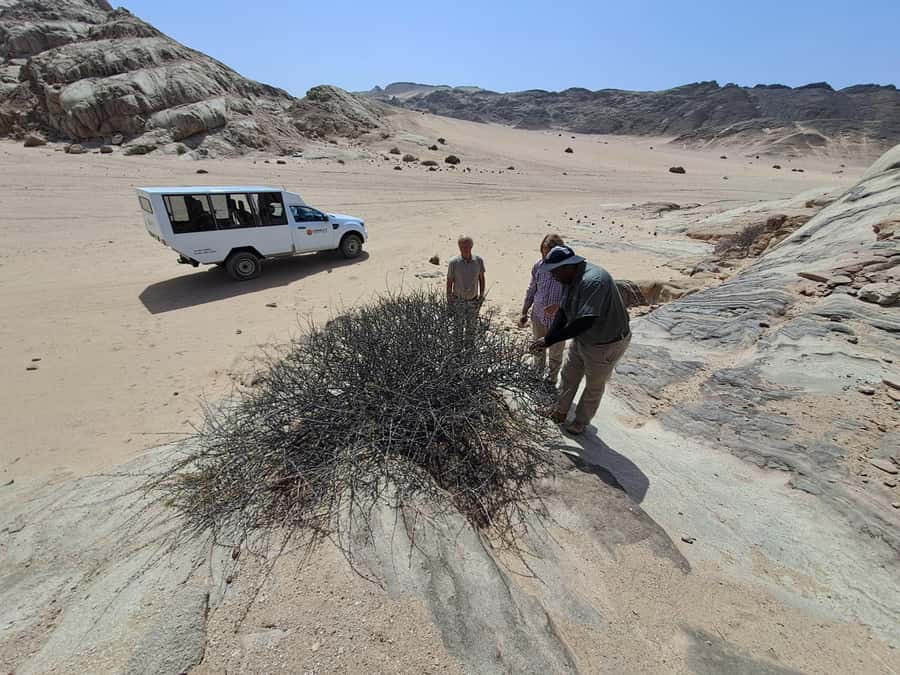
If you come to this tour for one thing, make it the Welwitschia mirabilis education. This plant is singled out as a desert treasure, and your guide uses it as a gateway to how plants can survive when water is scarce and conditions are unforgiving. You don’t just hear the name, you learn why it stands out and what makes it so special in the Namib context.
The best part is how human-sized the explanations feel. The tour isn’t about fancy terminology, it’s about helping you see a living answer to desert survival questions. In previous tours with guides like Ernst and Frank, people have praised the clear explanations and the evident love for the land, and that kind of energy makes a biology topic easier to follow.
Expect the guide to point out the Welwitschia context in its natural setting, not just a quick mention. That improves your photos too, because you’ll know what you’re photographing and what to look for around it. If you’re traveling with kids or friends who get bored easily, this is also the kind of topic that sparks questions fast.
Desert flora with real-life uses: medicine, food, and Indigenous knowledge
One of the most grounded parts of the tour is the way it treats desert plants as useful, not just pretty. You’ll learn about desert-adapted flora and how Indigenous people valued plants, including medicinal and nutritional uses. This turns the whole Namib ecosystem into something more practical, you stop thinking of the desert as empty and start thinking of it as a pantry and a pharmacy.
Your guide will walk you through plants’ roles and how they fit into life in Southern Africa. Even if you’ve visited botanical gardens before, this feels different because it’s connected to the actual ground, the climate pressure, and what people historically needed. It’s also a reminder that local knowledge is part of the science, not an add-on.
You’ll get a better sense of why survival strategies matter. Desert-adapted plants do not grow randomly, the tour makes that point by linking plant education to how life manages limited resources. The result is that you leave with more than photos of odd plants, you leave with a mental model for why they survive.
Wildlife spotting without guarantees: how to get the most from your eyes
Wildlife spotting is one of the main reasons people sign up, and the tour gives you a smart approach to scanning the habitat. You might see springbok, ostrich, and chameleons, and the tour also lists possibilities like klipspringer, Swallow-tailed Bee-eater, and Karoo Chat. You may also notice smaller creatures like beetles, which is a nice reminder that the desert is never truly silent.
Still, wildlife sightings are not guaranteed. I like to treat this as a good thing, not a deal-breaker. When you know animals are a bonus, you pay closer attention to tracks, movement patterns, and the way plants and rock cover shape where animals feel safe.
Because the walking is described as minimal, you’re not going to be sprinting around. That’s helpful for spotting smaller animals, since fast movement scares wildlife and burns your energy. You’ll get time to pause, look, and let the guide point out what you might have missed on your own.
A practical tip: bring patience more than binoculars. In a short, 4-hour outing, being reactive helps less than being steady. If your guide names a potential bird or animal and tells you where to look, take the direction quickly, then watch slowly.
More Moon Landscape drives:
- Welwitschia Tour from Swakopmund
★ 4.5 · 20 reviews - Sandwich harbour and Welwitschia Tour
★ 5.0 · 13 reviews - Moonlandscape & Welwitschia Drive
★ 5.0 · 10 reviews - Shore Excursion – Flamingos ,Dune7,Welwitschia, Moonlandscape,Oasis,Swakopmund.
★ 5.0 · 8 reviews
The itinerary flow: viewpoint stop, secret stop, then back to Swakopmund
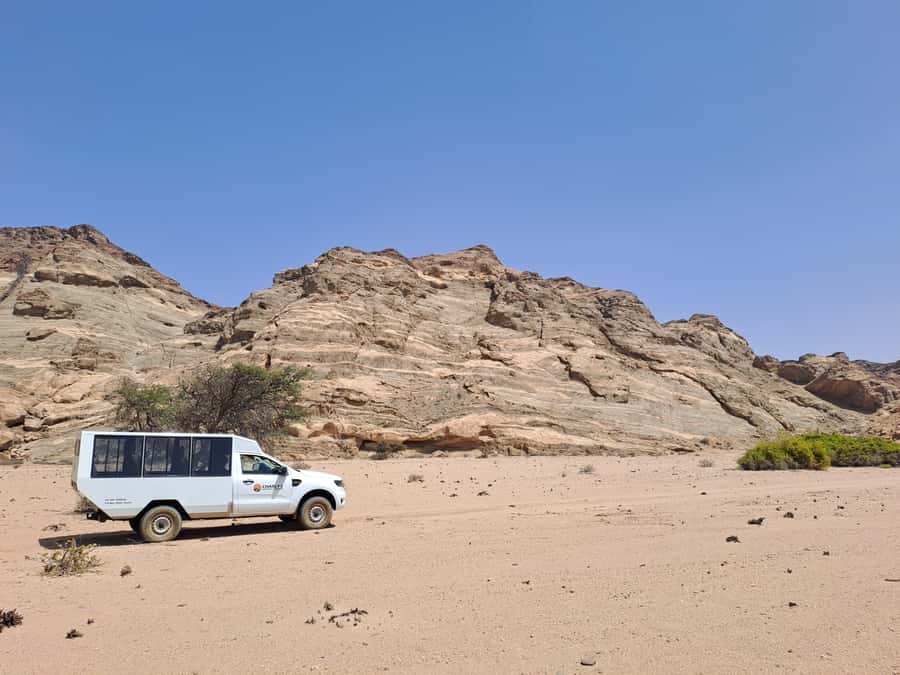
This tour is designed as a smooth guided loop, not a day of long transfers. You start with pickup in Swakopmund, then head out for the guided experience focused on Moon Valley and Namib Desert education. The pacing keeps you engaged because there are stops with a reason: photo moments, then quieter observation moments for plants and wildlife cues.
The first major phase is the guided portion of the Moon Valley experience. It’s where the ancient canyons and badlands become the main subject, and where the guide can explain what you’re seeing while it still feels fresh. You’ll also get the early context you need for the plant education that follows.
Next comes a viewpoint photo stop. This is where you can take a breath, frame your shots, and compare what the guide said with what your eyes are seeing. If you’re picky about photos, arrive ready, camera charged, and eyes open, because the best framing depends on noticing the structure of the terrain.
Then you’ll go to a secret stop. It’s part of why the tour feels more than basic sightseeing, because it adds an extra layer of discovery beyond the headline location. This is also the moment where the guide can shift focus to additional flora, survival strategies, and smaller wildlife possibilities.
Finally, you return to Swakopmund. You’ll have mineral water included, which is a small but welcome detail for a half-day plan. At 4 hours total, this tour fits neatly between meals and other activities without eating your whole day.
Small group, English guide, and the reality of uneven desert terrain
This is a small-group tour limited to 2 participants, which changes the whole feel. You get more time to ask questions, and the guide can adjust the pace if you want to slow down for plant details or stop for extra photos. In past experiences led by guides such as Ernst and Frank, visitors have appreciated the depth of explanations and the sense that the guide truly cares about the landscape.
The tour is in English with a live guide, so you can expect conversation-style learning rather than a printed script. That’s a big deal for topics like desert flora uses, where the guide’s tone and examples help you understand the point instead of memorizing facts.
In terms of movement, the walking is described as minimal, but the terrain is uneven. That means you should wear shoes with solid grip and plan for careful steps. If you’re sensitive to rocky ground or balance issues, this is not the tour to test your limits.
It is also not suitable for wheelchair users. If mobility is a concern, this is the right time to pick a different style of tour where the route is more predictable.
Price and value: $57 for a 4-hour guided Namib Desert experience
At $57 per person for a 4-hour tour, the value comes from the tight package: guided education, wildlife spotting time, and mineral water, all with pickup in Swakopmund. The price is not only for transport, it’s also for interpretation, meaning you learn what you’re looking at instead of guessing.
For me, the best value signal is the combination of three elements: Moon Valley geology, Welwitschia mirabilis education, and desert plant uses. Those topics are hard to replicate on your own because they depend on knowing what to look for. Add in the small-group format and the likelihood of useful conversation, and $57 starts to feel like it’s buying time with an expert guide, not just entry into a scenic area.
The trade-off is that you are paying for an education and viewpoint experience, not for guaranteed animals. If you go in expecting a zoo-style day, you might feel disappointed. If you go in expecting a guided way to read the desert, you’ll probably feel satisfied.
Also, the 4-hour duration makes this a practical option if you are short on time in Erongo. You can do it without sacrificing a full day’s plans in Swakopmund, which is exactly the kind of travel math that tends to work in real life.
Getting picked up in Swakopmund without stress
Pickup is included at any hotel or guesthouse in Swakopmund. If you’re staying in an Airbnb-type accommodation, you will not get pickup from the property. Instead, you meet at the Desert Explorers parking area, and you should look for the Charly’s Desert Tours vehicle.
This kind of detail matters because it protects your schedule. If you show up at the wrong place, you lose the only thing you cannot replace easily, time in a short tour window. So check your exact meeting point before your pickup time, and build a little buffer into your morning.
Should you book Charly’s Moon Valley and Namib Desert tour?
Book this tour if you want a short, well-paced desert experience with hands-on plant and desert survival education. It’s especially good for people interested in geology, botany, and learning how desert-adapted flora matters to human life. The small group setup makes it easier to ask questions, and English guidance keeps the explanations accessible.
Skip it if you need a wheelchair-friendly route or if you can’t handle uneven desert ground. Also skip it if your main goal is guaranteed wildlife sightings, because sightings are not promised and the desert does not work like that.
If you’re in Swakopmund and you want your half-day to feel intelligent, scenic, and grounded in real desert knowledge, this is a strong bet. It’s the kind of trip where you leave saying, I get what I was looking at, which is the best souvenir you can bring home.
FAQ
How long is the Moon Valley and Namib Desert Welwitschia tour?
The tour runs for 4 hours.
What is the price per person?
The price is $57 per person.
Is pickup included, and where do I meet if I am in an Airbnb?
Pickup is included from any hotel or guesthouse in Swakopmund. For Airbnb-style stays, you meet at the Desert Explorers parking area and should look for the Charly’s Desert Tours vehicle.
What language is the tour guide?
The live tour guide speaks English.
Will I definitely see wildlife on the tour?
Wildlife sightings are not guaranteed.
Is this tour suitable for wheelchair users?
No, the tour is not suitable for wheelchair users.
Latest reviews from Swakopmund
- Spitzkoppe – Day Tour to the Spitzkoppe Mountain from Swakopmund★ 5.0 · 3 reviews
- Unforgettable Half Day Adventure, Explore Sandwich Harbour★ 5.0 · 3 reviews
- Walvis Bay Shore Excursion: Flamingos, Dune 7, Swakopmund★ 5.0 · 3 reviews
- Half Day Swakopmund Cultural Historical Township Tour★ 5.0 · 4 reviews
- Full-Day Tour in Namib Desert from Swakopmund, Namibia★ 5.0 · 3 reviews
- Walvisbay Dune 7 and Swakopmund Town Half Day Guided Tour★ 4.0 · 4 reviews
- Swakopmund Cultural Township Private Day Tour★ 3.8 · 4 reviews
- Swakopmund Explorer Township Tour in Mondesa with Nande the Township Local Guide★ 5.0 · 4 reviews
Welwitschia & Moon Landscape Drives, compared.
Shore Excursion – Flamingos ,Dune7,Welwitschia, Moonlandscape,Oasis,Swakopmund.
Read our review →Browse the lists this tour appears in