
Reviewed · SOSSUSVLEI TOURS
9 Day Etosha, Skeleton Coast and Sossusvlei Camping and Lodge Safari
What makes this Namibia trip so interesting is the way it strings together three big hits in one go, Etosha wildlife, the Skeleton Coast, and the Sossusvlei dune world. I like that you ride in a custom safari vehicle with a pop-up roof, which makes spotting animals easier and more comfortable. I also like the balance of camping nights plus lodge-style accommodation, so you get the real outdoors without living in the same setup all week. One thing to consider, you’ll need to plan for chilly nights and bring a sleeping bag, since it’s listed as not included.
The second reason this works is the variety of experiences, not just game drives. I like the added texture of people and conservation stops, including the Himba village visit, and I like that your Etosha time is paced around waterholes, including a floodlit waterhole evening at Okaukuejo. A possible drawback is that some days are long drives, so you should be okay with being on the road as part of the deal.
Finally, I like that the trip gives you breathing space in Swakopmund, Namibia’s adventure hub, where you can choose how intense you want to get. I like that the operator builds in optional adrenaline activities (like quad biking, sandboarding, and cycling), instead of forcing a single plan on everyone. The catch is Swakopmund dinner is at your own expense, and drinks and snacks are also not included, so budget a bit extra for personal spending.
Small group safari rhythm (max 10 travelers)
Pop-up roof vehicle for better animal spotting
Etosha waterhole timing plus a floodlit waterhole evening
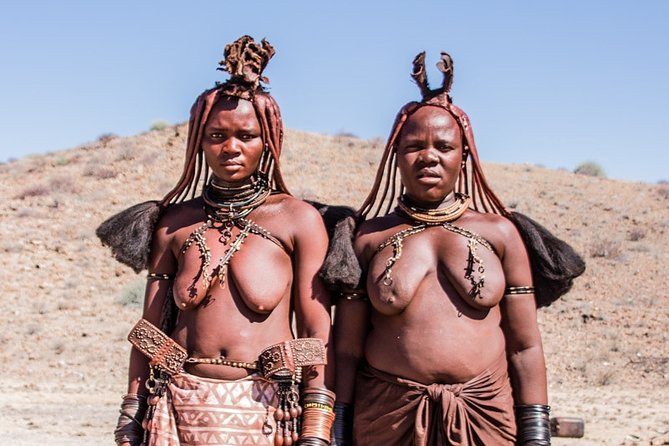
Himba village experience in Otjikandero
Skeleton Coast seal reserve at Cape Cross and the Zeila Shipwreck stop
Sossusvlei day with Deadvlei, Sesriem Canyon, and Dune 45 photos
From Windhoek to Etosha, the quick start that sets the tone
You begin in Windhoek with a group meetup and a short pre-departure talk, then you’re rolling north. The first day is really about easing into Namibia, with stops that help you understand the country beyond wildlife spotting.
A big, practical highlight is the stop at Okahandja’s woodcarvers market. You get an hour to look around, chat with woodcarvers, and yes, practice a bit of friendly haggling. Even if you don’t buy anything, it’s a good reset from “tour mode” into real local life.
Then the day turns into wildlife and conservation at Mount Etjo Game Reserve. This reserve is tied to rhino survival efforts, specifically supporting both black and white rhinos. After you arrive before lunch, you set up camp, eat, and then go out on an afternoon game drive aimed at spotting those rhinos and other reserve wildlife. Ending with a Namibian sunset out on the reserve is a nice way to start the safari without feeling rushed.
Etosha National Park: waterholes, big cats, and that floodlit night vibe
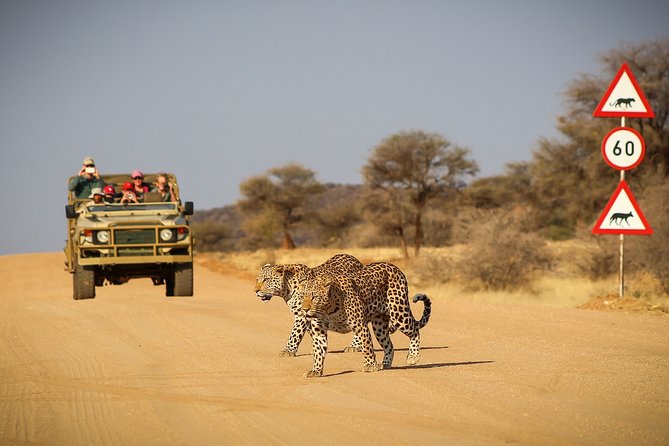
Etosha is one of those places where your expectations need to be tuned. Instead of “driving until you see something,” the park works on patterns. The guides position you near waterholes, and that’s where the wildlife gathers.
You enter Etosha and head toward Okaukuejo, where you camp and enjoy lunch before an afternoon drive. Game viewing is structured around moving from waterhole to waterhole, which matters because so many animals are drawn to the same reliable sources. You’re not only looking for big predators either. You’ll also scan for plains game, birds, and even reptiles.
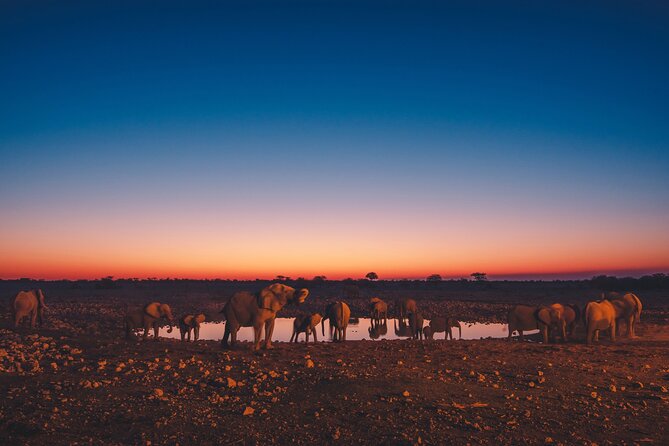
One moment that stands out in the overall experience is the chance to visit the floodlit waterhole after dinner. When the lights come on, the wildlife activity becomes easier to track, and you often get closer views than you would on a typical drive. You might see rhino, elephant, giraffe, lion, and hyena around that waterhole, which is a strong list for one night.
What I’d plan for: Etosha days can move fast, and “best viewing” often depends on timing. If you like photographing from a steady position, keep your camera ready during waterhole stops, not only while driving.
More Sossusvlei trips:
- 3 Day Sossusvlei Budget Camping Safari
★ 5.0 · 62 reviews - 7 Day Southern Namibia and Sossusvlei Camping Safari
★ 5.0 · 26 reviews - 4-Day Swakopmund And Sossusvlei Accommodated Adventure from Windhoek
★ 4.5 · 21 reviews
Sunrise on Etosha Pan and the “get out of the vehicle” moment
The next morning starts early, because this is where Etosha gives you its most dramatic feeling. You head out at sunrise and focus on the predators active early in the day, while also visiting multiple waterholes. Then you make a move to the Etosha Pan, the famous “great white place.”
A key detail here is that you can get out of the vehicle at the pan and experience the huge salt desert area for yourself. It’s one of the only times on this trip when the environment becomes the main attraction, not just the animals. After that, you continue with game drive time targeting the Big Four possibilities.
Later you’ll reposition through the central area near Halali, including lunch time and the option to use the pool area if available at the camp. Then you work your way back toward Okaukuejo for your last night of camping in Etosha, with another evening waterhole visit worth scheduling if you’re awake and energized.
Otjikandero Himba village and Palmwag’s desert-elephant chances
After Etosha, you switch from a wildlife-first day to a culture and conservation day. The stop at Otjikandero Himba Orphan Village is a guided experience focused on understanding Himba traditions and daily life. You tour the village, meet the people, and share a bit of your own culture as well.
This is one of those stops that can make the trip feel more human. Namibia isn’t only dunes and animals, it’s also communities, and this is the part that helps you connect the dots.
After that cultural experience, you head to Palmwag and set up camp. Palmwag is known for being a wilder-feeling area with a chance at standout sightings. In this itinerary, there’s even a note to watch for a desert elephant possibility. Even if you don’t get that specific animal, Palmwag’s scenery and the sense of remote space tends to stick with people.
Meals are typically prepared over an open fire on some nights, and that adds a “camp story” feeling that you don’t get from just eating in a lodge dining room. If you enjoy slow evenings, this is a good night for it.
Skeleton Coast to Cape Cross: shipwreck history and seal reserve reality
Now the trip changes gears again, heading toward the Atlantic and the Skeleton Coast. The coastline here is described as hostile and full of shipwreck stories, tied to thick fog, rough seas, and unpredictable currents. Even without going into shipwreck nerd mode, you’ll feel how serious the weather and terrain can be along this stretch.
As you move toward Cape Cross, you arrive late afternoon and set up camp. Sunset over the Atlantic is the kind of payoff that makes the long drive feel worth it. Dinner is prepared by your guide over an open fire, which keeps the experience hands-on.
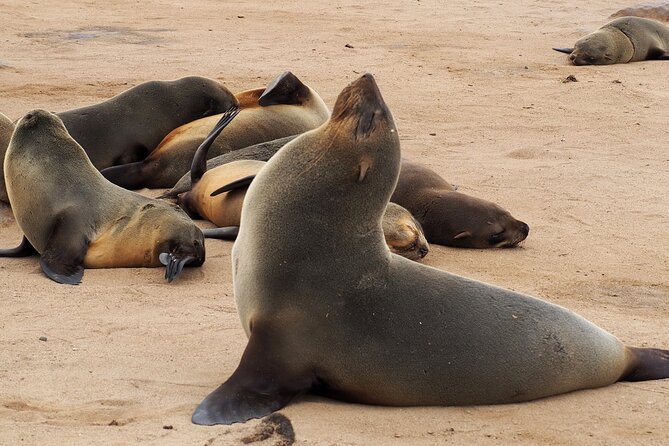
The next morning begins with a short walk to the Cape Cross Seal Reserve, a breeding colony for Cape fur seals. This is not a quick, polite viewing. It’s a full sensory experience. During breeding season, the number can be huge, with up to 200,000+ seals described in the seasonal note. Even outside peak season, it’s still an impressive place to see wildlife in such dense numbers.
After seals, you stop to view the Zeila Shipwreck, noted as one of the Skeleton Coast wrecks, with the very recent date of 2007 included. Then you head to Swakopmund, arriving early afternoon with time to walk around town and reset.
If you want a practical tip for this part: plan for wind and salt air. Your skin and camera gear will feel it.
More Etosha safaris:
- 6 Day Sand, Sea & Etosha Budget Camping Safari
★ 5.0 · 36 reviews - 4-Day Etosha And Swakopmund Accommodated Adventure from Windhoek
★ 4.5 · 19 reviews - Etosha Express Safari 3 Days / 2 Nights
★ 5.0 · 11 reviews - 3 Day Camping tour at Etosha National Park
★ 5.0 · 5 reviews
Swakopmund’s free time, then Tropic of Capricorn and onward to dunes
Swakopmund is a nice break because the pace can shift. You get time to explore on foot, and you can add optional activities if you want. This is where the trip becomes personal choice. Want adrenaline? You can look at sandboarding, quad biking, cycling through the old city, or even other adventure options offered locally. If you want calmer time, Swakopmund can be an easy place to wander, eat well (at your own expense for dinner), and stretch after days of camping.
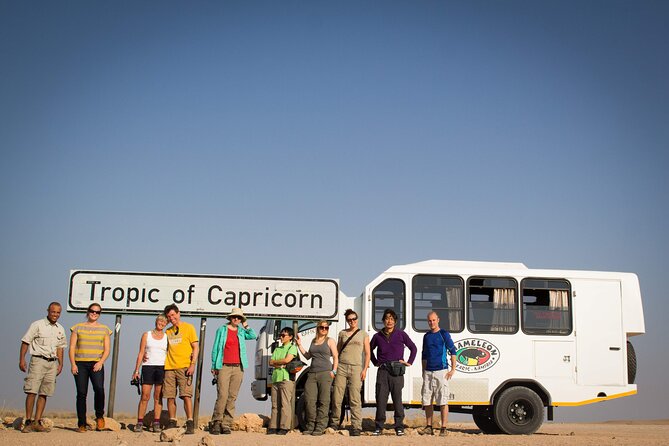
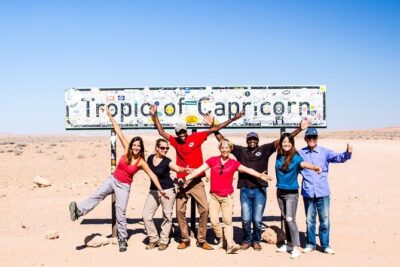
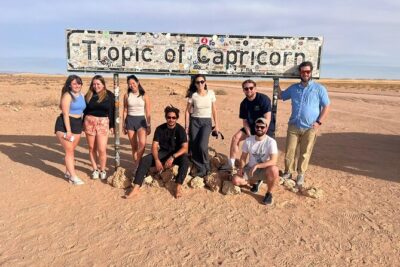
The following day is another “move, but with breaks” day. You leave Swakopmund at 11:30, so you’re not waking up too early just to start driving. Then you stop briefly at the Tropic of Capricorn for photos and a leg stretch, plus a short bathroom stop at Solitaire for drinks and snacks if you’ve stocked up.
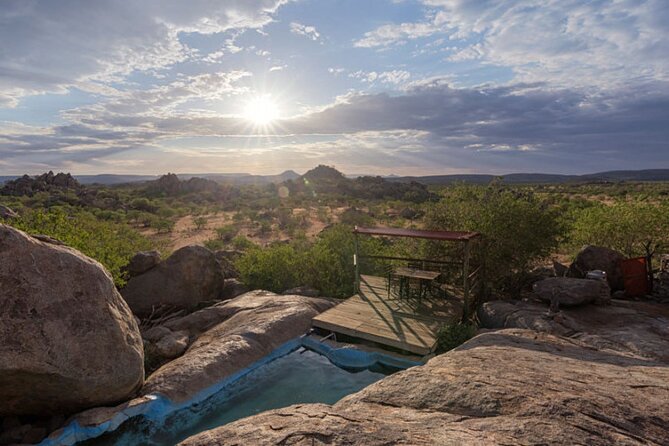
From there, you reach Desert Camp late afternoon. You settle in, take a quick walk for sunset views, and have dinner prepared by your guide. This is one of your better nights for sleeping early, because the next day is where the dunes hit hard.
Deadvlei, Dune 45, and Sesriem Canyon: how to do Sossusvlei without rushing
Sossusvlei is where Namibia becomes most visually dramatic. The day starts with Deadvlei, reached from the 4×4 car park. This is your chance to get that famous dead-tree and sand contrast feeling, with enough guided time to look around and take photos.
Then you head to Sossusvlei for brunch. That’s a smart pacing move because it gives you time in the dune area without making you feel like you’re sprinting from photo spot to photo spot. When you’re in a place like this, the dunes aren’t just something you look at, they’re something you feel with the light changing every hour.
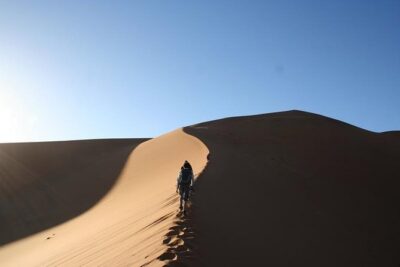
On the way out, you stop at Dune 45 for photos. This is the kind of stop that works best if you set expectations realistically. You’re not doing an all-day hike plan here. You’re getting iconic dune images and then moving on.
After dunes, you visit Sesriem Canyon, a smaller but important water source for local wildlife. Even if you don’t see animals right away, it helps you understand how life survives in the desert.
Solitaire Carnivore Conservation and your last return drive to Windhoek
Your final day is lighter, and it’s a good thing. You start at Solitaire Carnivore Conservation, where you get an hour learning about cheetahs. It’s a short stop, but conservation learning can be a helpful closure after a week that’s focused so much on wild animals in their environments.
Then you return to Windhoek past the Naukluft Mountains and Rehoboth, arriving early afternoon. The plan note says no flights recommended on this day, which is practical if you don’t want stress or delays to interfere with your onward travel.
If you’ve got extra time in Windhoek after you return, this is usually a good day to do it, because you won’t have a safari vehicle waiting on you.
Price, meals, and the real value behind the $2,568.47
At about $2,568.47 per person for a 9-day Namibia circuit, the best way to judge value is to look at what’s included that would cost you anyway.
You’re getting 5 nights camping plus 3 nights accommodation (twin share), camping equipment, a custom pop-up roof safari vehicle, and a professional English-speaking driver and guide. The big tickets included are also specific: Etosha game drive time, the Himba village experience, the Cape Cross Seal Reserve visit, and a full day exploring the Sossusvlei region including Sesriem Canyon.
Food is also part of the value. You’ll have breakfasts, lunches, and dinners included across the trip, with the one clear exception called out as Swakopmund dinner at your own expense. Tap water is provided, but drinks, snacks, and alcohol are not included, so you’ll still want to plan personal spending.
What you should watch for in budgeting:
- Optional activities in Swakopmund are not included.
- Drinks and snacks during any drive day will be extra.
- Travel insurance is not included.
- You might need to bring a sleeping bag.
Compared to doing Namibia in pieces, this package reduces coordination headaches. You get the route stitched together for you, plus the in-person guiding that makes the wildlife and culture parts meaningful.
Comfort on this kind of safari: camping, tents, and that pop-up roof reality
This trip uses a custom safari vehicle with a pop-up roof, which is great for animal spotting and viewing, especially when everyone is searching the same horizon line. The tradeoff is you are still in a vehicle for long stretches. That’s normal in Namibia, and you’ll enjoy it more if you pack for comfort on day drives.
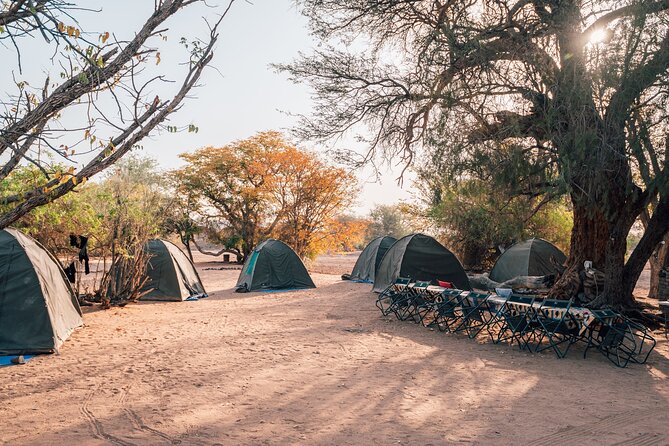
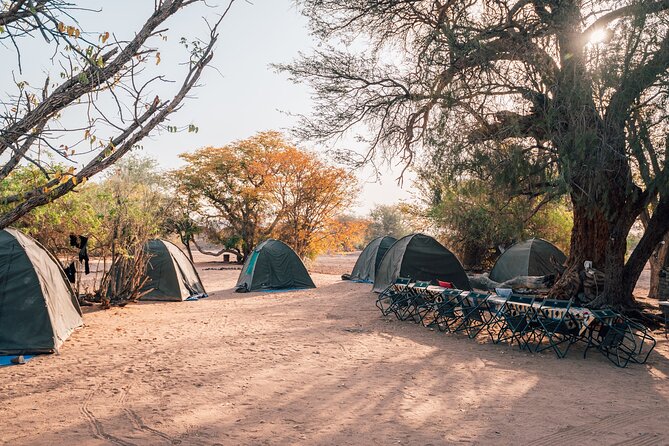
On nights, you have a mix of camping and accommodation. Camping equipment is included, and you’ll set up camp as part of the routine. The trip also asks for moderate physical fitness, which makes sense given the walking involved at Cape Cross (short walk) and the general day length.
Gear note that matters: sleeping bag is not included. Pack one if you’ll be cold. Even if the tents and beds are comfortable, your sleep will depend on your own warmth system.
If you’re the kind of traveler who hates fussing with kit, this trip is still doable because the camping equipment is handled and the guide team manages meals and camp workflow.
Guide team energy, and why it matters more than you think
On safari, the guide is not a background role. They choose where to stop, when to push, and how to keep the group comfortable while hunting for animals and maintaining schedule.
A strong theme in the trip experience is the guide team’s ability to run things smoothly and keep you informed. Names that come up include Kennedy, Smithley or Smith-Lee, Gregory, Johnny, Gideon, Chimunya, and Taimi. Multiple people highlight how patient and fun the guides were, and how good meals were, including open-fire cooking.
That matters because in Namibia, wildlife sightings can never be guaranteed. What you can guarantee is the quality of the day: timing, explanations, and a calm vibe when you’re far from help. This operator’s guides seem to deliver that consistently.
Should you book this 9-day Etosha, Skeleton Coast, and Sossusvlei tour?
If you want one Namibia trip that covers the big three in a single week-plus, this is a strong match. You’ll get wildlife time at Etosha, a dramatic coast stop with seals at Cape Cross, and a proper Sossusvlei day with Deadvlei and Sesriem Canyon. Add in the Himba village visit and the Swakopmund free-time window, and the trip doesn’t feel like a one-note safari.
You might skip it if:
- You hate camping or cold nights and don’t want to bring a sleeping bag.
- You want a very relaxed pace with minimal driving.
- You’re traveling only on a tight budget once you factor optional activities and personal drinks.
My take: if you’re flexible, enjoy big scenery, and want real guiding instead of just being chauffeured around, this package is a smart way to experience Namibia’s most famous stretches without spending weeks planning.
FAQ
What time does the tour start in Windhoek?
The meeting start time is listed as 7:00 am.
Is pickup offered, and where?
Pickup and drop-off are offered within Windhoek city limits, with return airport transfers also included.
How many travelers are on the group?
The tour has a maximum group size of 10 travelers.
Is a sleeping bag included?
No. A sleeping bag is not included.
What kind of transport will I use?
You travel in a custom built safari vehicle with a pop up roof.
Are meals included?
Yes. Breakfast, lunch, and dinner are included during the trip, but dinner in Swakopmund is at your own expense.
More Skeleton Coast Tours in Windhoek
- Skeleton Coast Cape Cross Seal colony Tour
★ 4.0 · 11 reviews - Cape Cross and Henties Bay Guided Tour SkeletonCoast Namibia
★ 5.0 · 4 reviews
More Camping Safaris
- 12 Day Classic Namibia Camping Safari
★ 5.0 · 77 reviews - 9 Day Canyons, Dunes & Wildlife Camping and Lodge Safari
★ 4.5 · 23 reviews - 7 Day Northern Namibia and Skeleton Coast Camping Safari
★ 5.0 · 19 reviews - 3 Day Sossusvlei Camping Schedule and Sandwich Habor
★ 4.5 · 9 reviews
Latest reviews from Windhoek
- Knight Vibes: Bars, Shebeen, Clubs Crawl Windhoek★ 5.0 · 3 reviews
- 10 DAYS BEAUTY OF NAMIBIA | Guided Lodge★ 5.0 · 3 reviews
- Windhoek: Katutura Township Tour with Local Guide★ 3.5 · 3 reviews
- Windhoek: City & Township tour. Vehicle, guide, kapana★ 4.2 · 4 reviews
- Predator Encounter: Half-Day Carnivore Feeding Windhoek★ 4.0 · 5 reviews
- 3 Day Camping tour at Etosha National Park★ 5.0 · 5 reviews
- Airport Transfers★ 5.0 · 5 reviews
- 3 Day Camping safari at Sossusvlei★ 5.0 · 5 reviews
Sossusvlei Tours, compared.
7 Day Southern Namibia and Sossusvlei Camping Safari
Read our review →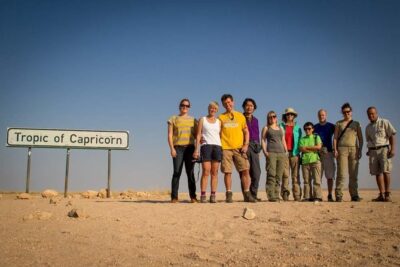
4-Day Swakopmund And Sossusvlei Accommodated Adventure from Windhoek
Read our review →
5-Day Sossusvlei & Sandwich Harbour Photography Tour
Read our review →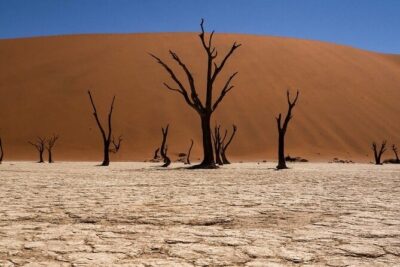
2 Day Scenic Sossusvlei Adventure Tour in Namibia
Read our review →
3 Days Amazing Red Dunes of Sossusvlei | Private Guided Tour
Read our review →
3 Day Sossusvlei Camping Schedule and Sandwich Habor
Read our review →Browse the lists this tour appears in